
AI and environmental sustainability hand in hand
5 mins read
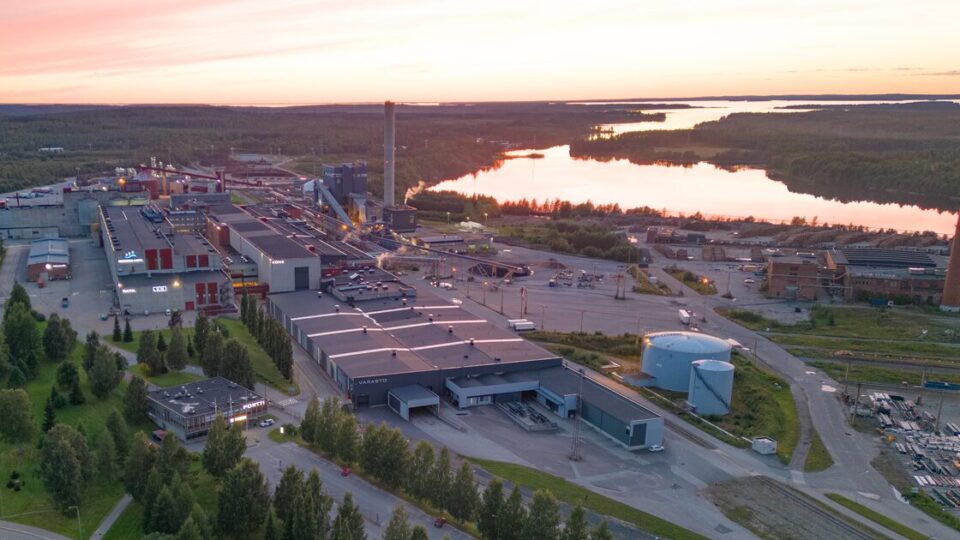
The AI revolution is here, but does it have to come at the cost of our planet? AI and high-performance computing are not at odds with environmental responsibility. Instead, they are the tools we can utilize to build a more sustainable world. While the energy consumption of AI is a growing global concern, the more important question is how that energy is produced and used.
In this blog, I highlight the key insights from my Bachelor’s thesis for LUT University Finland, which examined LUMI supercomputer as a practical example of how supercomputing can be environmentally sustainable without compromising performance. While AI creates an environmental footprint that can’t be erased entirely, LUMI can manage and reduce it significantly.
A dual mission
Technology should be part of the solution, not the problem. While high-performance computing is energy-intensive, it is a necessity for solving global crises. Supercomputers like LUMI have a dual role: they enable climate and biodiversity research at a scale that isn’t possible otherwise, while also minimizing their own footprint through renewable energy and circular economy solutions.
Sustainability is built into the way LUMI operates. LUMI is powering international research projects. For example, EU’s Destination Earth project uses LUMI’s massive computing power to create a digital twin of our planet. This allows researchers to simulate and predict climate patterns with accuracy. Similarly, the BioDT project creates digital models of biodiversity to help understand how to better protect our ecosystems. LUMI is also the current computing backbone for the LUMI AI Factory. LUMI AI Factory brings together world-class computing power, high-quality data, and top-tier expertise.
Looking beyond training
As the UN notes, the explosion of data is what fuels AI, but this growth also creates an environmental burden that must be managed.1 AI models have grown much bigger and more complex. Training them requires massive amounts of power and a great amount of GPUs working together in a supercomputing environment. The environmental impact doesn’t stop once the training is over. Data storage, moving data around, and the energy it takes to build the data centers and hardware needs to be considered. Inference, the use of AI models, is usually what consumes the most energy over the long run.
AI models and their designs are so different from one another that trying to pin down the exact emissions of a single training session is like trying to hit a moving target. Because of this, in my thesis I decided to focus on the full hardware lifecycle. To be truly responsible, we need to look at the whole picture. From mining raw materials and manufacturing parts to how the data center is built and eventually, how the electronic waste is handled.
Sustainability by design
LUMI is a global benchmark for sustainable computing. Many of LUMI’s solutions are standard practice in Kajaani, Finland where LUMI is located, but they are revolutionary for the rest of the world.
Latest statistics that show how LUMI is setting records for sustainable computing:
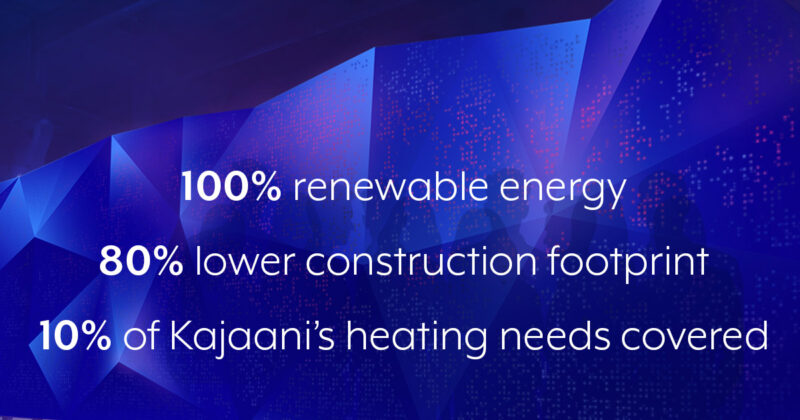
- We purchase 100% certified renewable electricity.
- LUMI uses an efficient closed-loop liquid cooling system that uses circulating liquid to capture heat directly from the components enabling massive heat recovery.
- In 2025, LUMI produced over 34,100 MWh of heat for Kajaani’s district heating network. That’s enough to cover about 10% of the city’s heating needs.
- LUMI’s location in high northern latitude enables free cooling year-round. The naturally cold climate means the data center requires minimal temperature control.
- Placing LUMI in an old paper mill is estimated to have reduced the carbon footprint by about 80% compared to building a new facility.
- As part of the EuroHPC Joint Undertaking’s network of systems, LUMI followed EU public procurement directives that require high environmental and social responsibility. The process prioritized ‘European added value,’ meaning that energy efficiency and environmental protection were priorities during the selection of partners.
- The upcoming LUMI-AI system as part of the LUMI AI Factory will be focusing on high-quality data and optimised model operations, ensuring computing power is used with maximum efficiency and sustainability.
Smarter software, lower impact
Responsibility isn’t just about hardware. Focus should also be on software optimization. A great way to manage AI’s impact is to act early. The goal is to help researchers make more sustainable choices from the very start, optimising AI designs for energy efficiency before the AI model training even begins. LUMI was a part of an EU project called Green NLP, which successfully developed more eco-friendly ways to train language models.
LUMI proves that when we combine renewable energy, excess heat recovery, a brownfield solution and smart software, we can successfully manage the environmental impact of AI. The environmental impact can’t be erased entirely, but LUMI can manage and reduce it significantly. Our mission is to enable research that builds a better future for everyone.
Sources
1 AI has an environmental problem. Here’s what the world can do about that.
Want to learn more?
Bachelor’s Thesis (in Finnish): https://urn.fi/URN:NBN:fi-fe20251222123197
CSC’s Impact Review 2025: https://csc.fi/app/uploads/2026/03/ImpactReview_2025.pdf
CSC’s Sustainability Report 2025: https://csc.fi/app/uploads/2026/03/SustainabilityReport_2025.pdf
Written by

Heini Tallgren
Industrial Engineering and Management student Heini Tallgren works at CSC as a Junior Contract Specialist. She recently published a Bachelor’s thesis focusing on the environmental sustainability of the LUMI supercomputer.