
Green Factory AI is helping manufacturers become more sustainable and efficient
5 mins read

When Finnish startup Green Factory AI was founded in 2024 by Hung Ta, Petteri Ormio and Cuong Nguyen, its founders shared an ambitious vision: using industrial AI to help manufacturers become more efficient, sustainable and productive.
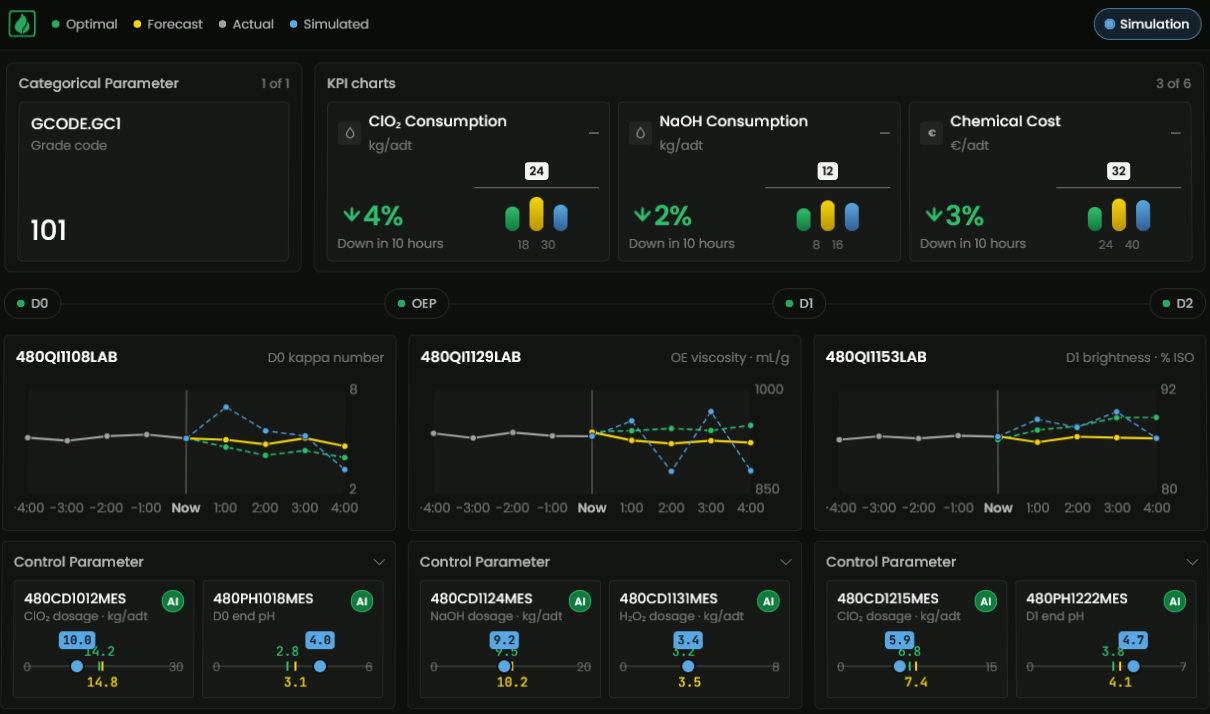
The company’s software analyses industrial production data to help factories optimise operations in real time. By reducing the use of energy, water and chemicals while maintaining product quality, the technology aims to improve both profitability and sustainability.
– We believe this technology will transform how production processes are run. The goal is to transfer knowledge between processes and across industries, making industrial operations more optimised and intelligent, says Co-Founder and CEO Hung Ta.
Turning industrial data into actionable insights
Modern factories generate large amounts of data, from machine performance and chemical dosing to process measurements across production lines. Green Factory AI’s software brings these data streams together and builds AI to identify patterns, predict outcomes and recommend optimal operating conditions.
– Basically, we have a lot of real-time industrial data, including machine performance data, chemical dosing information and time-series data covering the entire manufacturing process. Based on this data, our AI models can help factories avoid quality issues and find the best operating configuration in real time, says Co-Founder and Chief Sales Officer Petteri Ormio.
Green Factory AI’s technology is designed to help manufacturers reduce resource consumption, lower costs and improve the sustainability of their operations without compromising performance.
– We see huge potential in this technology. It can help factories around the world become more efficient, productive and sustainable, Ta says.
Building foundation models for industrial processes
Green Factory AI is developing foundation models specifically designed for industrial data.
Unlike AI models designed for a single process or production line, foundation models are trained on large and diverse industrial datasets. This enables them to learn patterns that can potentially be transferred between factories, processes and even industries, making future deployments faster and more scalable.
The first version of the software was released this year, and the company has already begun commercial deployments in Europe.
Early use cases include hygiene paper production in the Netherlands and bleaching processes at Swedish pulp mills, both of which involve significant chemical consumption.
– These are some of the most promising use cases. The bleaching processes require significant amounts of chemicals because consumers still want white paper products. With our solution, it is possible to optimize the entire process. It’s both a profitability and a sustainability question, Ormio explains.
By training models on large industrial datasets, the company aims to create AI solutions that can be deployed more quickly and scaled across factories and industrial sectors.
Training industrial AI on LUMI supercomputer
Green Factory AI has worked with the LUMI AI Factory from the early stages of its development. Having previous experience with the LUMI supercomputer, Ta and his team contacted experts at the LUMI AI Factory early on.
Developing industrial foundation models requires significant computing capacity. The models are trained on years of production data, encompassing thousands of parameters and millions of industrial measurements.
– The aim is to develop very large-scale and scalable models across industrial processes. That will make them faster to deploy and easier to scale across factories and industries, Ta explains.
Industrial manufacturing can benefit significantly from AI model development, yet many opportunities remain unexplored. Leveraging process data to optimise operations and enhance sustainability is a key area of interest for many companies.
– This case demonstrates how factory data can be transformed into valuable insights that reduce resource consumption, and support more sustainable production practices. Through the LUMI AI Factory, we help organisations explore and develop AI solutions that deliver measurable business value, says Alexandra Peth, Customer Manager at CSC.
Beyond process optimisation, Green Factory AI also sees AI as a way to preserve and share operational knowledge. Many industrial sectors face an aging workforce, with experienced operators retiring and fewer younger employees entering the field.
– There’s often a lot of focus on AI replacing people, but AI can also help companies preserve valuable operational knowledge as processes become more automated, says Ormio.
Global ambitions and expanding use cases
Today, Green Factory AI has a team of eight people across Europe and New York. While the company is currently focused on the pulp and paper sector, its ambitions extend much further.
The next target industries include chemicals, metals and discrete manufacturing. Geographically, the company is looking beyond Europe to Asia and the Americas, home to many of the world’s largest industrial production facilities.
– We started with pulp and paper in Europe. The next step is to expand to customers in industries such as chemicals and steel, and eventually into discrete manufacturing. We also see significant opportunities in Asia and the Americas, Ta says.
The company is also exploring additional data sources that could further strengthen its models.
– We could incorporate other types of data, such as weather data. For example, predicting how environmental conditions might affect production in the future, says Ormio.
As Green Factory AI expands into new industries and regions, the company expects its demand for computing power to grow.
– In the future, we will need even more computing resources. We are only getting started with LUMI, Ta concludes.
Author: Anni Jakobsson, CSC – IT Center for Science
Image on top: Green Factory AI founders Petteri Ormio and Hung Ta share a vision of making manufacturing smarter and more sustainable through the use of industrial AI. Image: Marica Rosengård